
Noticing damp patches in your home is understandably worrying, especially when it’s not clear what’s causing the problem or how best to manage it. Rising damp and condensation are often mistaken for one another, yet they have distinct causes and require unique solutions.
Getting the diagnosis right from the outset matters. It prevents unnecessary work, avoids wasted expense, and ensures your property is protected. With over 30 years of experience, we explain the differences between rising damp and condensation, helping you understand what you may be dealing with and when it’s time to seek professional advice.
Rising Damp vs Condensation: What’s the Difference?
If you’re unsure how to tell rising damp or condensation issues apart, the key way to distinguish them is by understanding the source of the moisture.
What Causes Condensation?
Condensation is an internal problem – it occurs when warm, moisture-laden air meets a cold surface, such as windows, external walls or ceilings. The water vapour in the air cools and turns back into liquid droplets, especially when there’s no adequate ventilation for the moisture to escape.
Everyday activities contribute to condensation, including:
- Cooking and boiling kettles
- Showering and bathing
- Drying clothes indoors
- Even breathing
What Causes Rising Damp?
A rising damp issue is caused by moisture from the ground travelling up through walls by capillary action – similar to how a sponge absorbs water. Brickwork and mortar are porous, allowing groundwater to rise through the structure.
This issue is most common in properties built before 1875, which were often constructed without a damp-proof course (DPC). However, rising damp can also occur in newer buildings if:
- The DPC has failed or deteriorated
- Building works have damaged the DPC
- External ground levels have been raised, bridging the DPC
How to Identify Rising Damp
Rising damp follows a fairly predictable pattern and is often limited to ground-floor walls.
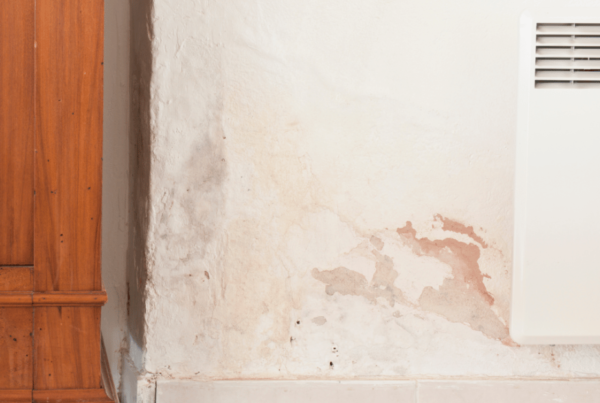
Common signs of rising damp are noticeable around the skirting board level and lower wall areas, and include:
- Horizontal “tide marks” – Clear brown, yellow, or dark staining that forms a visible line across the wall, typically no higher than 1 to 1.5 metres.
- White powdery deposits (efflorescence) – These salts are carried up from the ground and left behind as moisture evaporates from the wall surface.
- Damaged plaster and finishes – Plaster may crumble, blister, or flake away. Paint and wallpaper often peel from the bottom upwards.
- Deteriorating skirting boards – Timber skirtings can become soft, warped, or rotten where they are in prolonged contact with moisture.
- An earthy smell – Rising damp tends to produce a soil-like odour rather than a musty one.
What Are Common Condensation Damp Symptoms?
Condensation behaves very differently and can affect properties at any level. Some typical areas where it forms include windows (especially in the mornings), in bathrooms, kitchens and utility rooms, and wardrobes or poorly ventilated cupboards.
In any of these areas, condensation can occur as:
- Water droplets on surfaces, such as windows and walls, may feel cold and wet to the touch.
- Black mould growth, which looks like small black spots or patches around window frames, in corners, and behind furniture where air circulation is limited.
- Seasonal worsening sees an increase in condensation problems during winter when temperature fluctuations increase and windows are closed.
- Musty odours come from mould and mildew rather than moisture rising through the structure.
- Localised surface damage can involve peeling paint and wallpaper, but damage is usually superficial and not confined to lower walls.
Key Differences at a Glance
If you’re unsure which issue you’re facing, these distinctions are helpful:
| Rising Damp | Condensation | |
| Height on Walls | Stays low | Can occur anywhere |
| Pattern | Causes horizontal tide marks | Causes random damp patches and droplets |
| Salt Deposits | Present | Not present |
| Timing | Fairly consistent year-round | Worsens in colder months and after moisture-producing activities |
| Location | Affects ground-floor walls only | Can appear throughout the property |
Why Correct Diagnosis Is So Important
Treating the wrong problem can be costly. Condensation misdiagnosed as rising damp can lead to unnecessary damp proof course work when improved ventilation would resolve the issue. Equally, assuming rising damp is condensation allows moisture to continue damaging walls and timber, potentially leading to more extensive repairs over time.
Professional surveys use electronic moisture detection to measure moisture levels within walls and timber, helping identify the true cause and British Standards-compliant solutions without guesswork.
When Should You Seek Professional Advice?
For peace of mind, it’s worth calling in a specialist if you’re unsure which type of damp is present. If the dampness persists even with proper ventilation or heating improvements, professional support may be necessary. Other signs that expert advice could be beneficial are if you see a mix of damp and condensation symptoms in various areas, your property was built before 1875, or multiple rooms or elevations are affected.
Expert Damp Surveys From Refresh PSC
Resolving damp problems across London and the South East UK, Refresh Property Services & Consultants take a careful, honest approach to diagnosis.
Our CSSW-accredited surveyors carry out detailed inspections using electronic moisture detection and other testing equipment. This approach provides a clear cause and cure for any rising damp or condensation concerns. We’ll explain the issue, why it’s happening, whether treatment is needed, and which compliant solution we recommend.
Find the right damp or condensation treatment with guidance from our specialists – contact us today for a no-obligation survey or complete our online contact form.